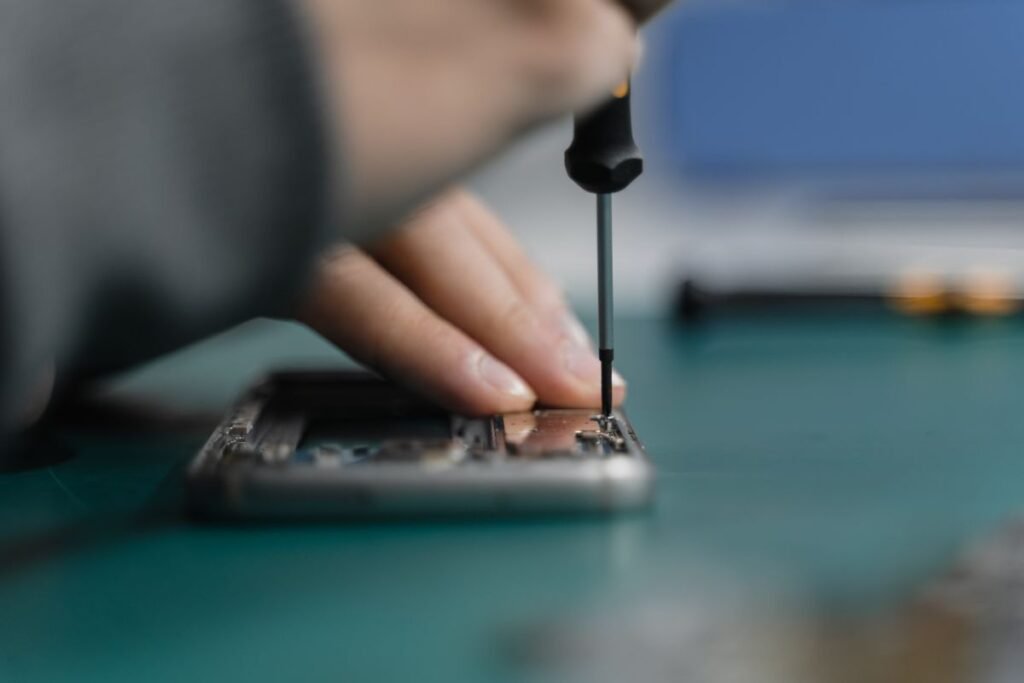
The number people usually quote me is five years. Sometimes three. Whoever told them that was reading a manufacturer’s booklet, and manufacturers write those with the worst case in mind, which is fair enough since they have never met your watch.
Here is how I actually answer it at the bench.
Mechanical watches
A mechanical movement runs on a film of oil about as thick as a fingerprint. That oil breaks down, migrates off the jewels, and eventually the pivots start running metal on metal. By the time you can hear or feel the difference, wear has already happened.
For a watch worn regularly, five to seven years is a sensible interval. If it sits in a drawer eleven months a year, you can stretch that, though not indefinitely, because oil ages whether the watch is running or not.
Some modern movements go longer. A few brands now quote ten years and they are not being reckless about it, since the lubricants have genuinely improved. Older pieces, particularly anything from before the 1970s, want to be seen more often.
What a service involves: full disassembly, cleaning of every part, replacement of worn components and gaskets, fresh lubrication, reassembly, regulation, and timing over several positions. It takes me between two and four weeks depending on parts.
Quartz watches
Different animal. The movement itself needs very little, but two things do.
The battery, every one and a half to three years. Change it before it dies rather than after, because a leaking cell will ruin a movement that was otherwise fine, and I see two or three of those a month.
The gaskets, whenever the case is opened. That is the part people skip. A new battery in a case with a flattened twenty-year-old gasket is a watch that is no longer water resistant, and nobody finds that out at a convenient moment.
The exception that matters most
If the watch goes in water, get the seals tested every year. Swimming, showering, dishes, rain in a Cleveland spring. It costs very little and it is the single cheapest thing you can do to keep a watch alive.
Water damage is the one failure I cannot always undo. Everything else on a mechanical watch is fixable given time and parts. Corrosion on a train wheel is a different conversation, and it is usually a short one.
Signs you are already overdue
Losing or gaining more than a minute a day when it used to keep better time. A power reserve that has quietly halved. A crown that grinds when you wind it. Moisture on the inside of the crystal, even briefly, even once.
Any of those, bring it in. The longer a tired movement runs, the more of it I end up replacing, and parts for older calibers are not getting easier to find.
What I tell people who inherited a watch
Do not wind it and do not set it. Bring it in as it is.
A watch that has been in a drawer since 1988 has dried oil sitting in every bearing, and running it in that state does real damage in the first hour. I would rather see it dead and untouched than running and grinding. That first look costs nothing, and about half the time I can tell you inside ten minutes whether it is worth the service.
The shop is on Shirley Avenue in Euclid. Walk in or call, and if you are not sure whether your watch needs anything at all, that is a fine reason to stop by.